
Test Sieves
Test Sieves

Test Sieves

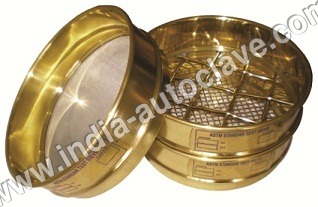
Test Sieves Specification

  • Product Type
  • Test Sieves
  • Dimension (L*W*H)
  • Standard size 8 inch diameter (other sizes available)
  • Color
  • Silver
  • Power
  • Not required (manual operation)
  • Usage
  • Particle Size Analysis, Separation of Materials
  • Capacity
  • Depends on mesh size and material, typically up to 500g per sieve
  • Classification
  • Lab Equipment
  • Weight
  • Approx. 400-500 grams per sieve
  • Material
  • Stainless Steel frame and mesh
  • Application
  • Laboratories, Material Testing, Quality Control
  • Operate Method
  • Manual or with sieve shaker


About Test Sieves

RT-510            TEST SIEVES

200 mm (8”) made of Rolled Brass Sheet, Spun Body jointless frame. Folded bottom having beaded rim at top. Mounted with Stainless Steel cloth . Finished as per BSS / ASTM / ISS / Microns.


MODELS

BSS

ASTM

ISS

Aperture

TS-01

4

5

480

4.75 mm

TS-02

5

6

340

3.35 mm

TS-03

6

7

280

2.80 mm

TS-04

7

8

240

2.36 mm

TS-05

8

10

200

2.00 mm

TS-06

10

12

170

1.70 mm

TS-07

12

14

140

1.40 mm

TS-08

14

16

120

1.18 mm

TS-09

16

18

100

1.00 mm

TS-10

18

20

85

850 microns

TS-11

22

25

70

710 microns

TS-12

25

30

60

600 microns

TS-13

30

35

50

500 microns

TS-14

36

40

40

425 microns

TS-15

44

45

35

355 microns

TS-16

52

50

30

300 microns

TS-17

60

60

25

250 microns

TS-18

72

70

20

212 microns

TS-19

85

80

18

180 microns

TS-20

100

100

15

150 microns

TS-21

120

120

12

125 microns

TS-22

150

140

10

106 microns

TS-23

170

170

9

90 microns

TS-24

200

200

8

75 microns

TS-25

240

230

7

63 microns

TS-26

300

270

6

53 microns

TS-27

325

300

5

45 microns

TS-28

350

325

4

44 microns

TS-29

400

380

3

40 microns

TS-30

Lid and Pan Set made of Brass for above


Precision Mesh and Durability

The test sieves are crafted from corrosion-resistant stainless steel, ensuring longevity and reliability even in demanding laboratory environments. The plain woven wire mesh allows for precise separation and particle-size analysis. With standard and custom mesh sizes available, these sieves conform to prominent international standards for consistent, traceable results.


Versatile and User-Friendly Design

Featuring interlocking frames for secure stacking, these sieves can be used manually or with a mechanical sieve shaker. Manual washing or ultrasonic cleaning keeps the sieves in optimal condition. Each unit is laser-marked for clear identification and can withstand operating temperatures up to 120C.


Wide Range of Applications

Designed for laboratories, material testing, and quality control, these sieves are suitable for particle size separation across various industries. Their robust design and standardized construction make them an ideal solution for exporters, manufacturers, and suppliers in India seeking quality-assured lab equipment.

FAQs of Test Sieves:


Q: How do I select the appropriate mesh size for my testing requirements?

A: To choose the optimal mesh size, consider the smallest and largest particles you wish to separate or analyze. The sieves are available from 10 microns to 100 mm, conforming to standards like ASTM E11. Select mesh sizes based on your materials specifications and testing objectives.

Q: What procedures should I follow for cleaning the test sieves?

A: Test sieves can be cleaned manually with a soft brush and mild detergent or by using an ultrasonic cleaner to remove fine particles. It is important to avoid abrasive materials to maintain the mesh integrity and prolong sieve life.

Q: When should I use multiple sieves in a stack during a particle analysis?

A: Stacking several sieves with varying mesh sizes is necessary when you need to separate materials into distinct particle size ranges. Securely interlocked frames allow for stable stacking during manual shaking or when using a sieve shaker.

Q: Where are these test sieves most commonly used?

A: These test sieves are widely utilized in laboratories, material testing facilities, and quality control departments across multiple industries such as pharmaceuticals, construction, mining, and food processing sectors.

Q: What benefits do stainless steel frames and mesh offer in laboratory applications?

A: Stainless steel provides excellent corrosion resistance, mechanical strength, and ease of cleaning, ensuring consistent performance and durability in laboratory settings. The polished finish also aids hygienic handling and maintenance.

Q: How are the test sieves marked for easy identification?

A: Each sieve is laser-engraved with the aperture size for permanent, accurate, and effortless identification, aiding traceability and compliance with testing standards.

More Products in General Equipment Category
Blood Bag Sealer

Blood Bag Sealer

Dimension (L*W*H) : 225 mm x 75 mm x 170 mm

Power : AC Powered

Color : White and Blue

Product Type : Blood Bag Sealer

Application : Blood Banks, Hospitals, Laboratories

Material : ABS Plastic and Metal

Senior Precision Rotary Microtome

Senior Precision Rotary Microtome

Dimension (L*W*H) : Standard Laboratory Equipment Size

Power : Not applicable (manual operation)

Color : Gray

Product Type : Senior Precision Rotary Microtome

Application : Medical and Laboratory Use

Material : Metal and Plastic

UV Transilluminator

UV Transilluminator

Dimension (L*W*H) : Available in 250 x 210 x 80 mm

Power : 30 W

Color : Silver/Black

Product Type : UV Transilluminator

Application : DNA/RNA analysis, molecular biology, electrophoresis gels

Material : Aluminum Body, UVresistant Acrylic Viewing Surface

Micro Spectrophotometer (Vis) Double Beam

Micro Spectrophotometer (Vis) Double Beam

Dimension (L*W*H) : Approx. 450x350x200 mm

Power : AC Power Supply

Color : White and Black

Product Type : Micro Spectrophotometer (Vis) Double Beam

Application : Laboratory Spectrophotometry

Material : Plastic and Metal


Back to top